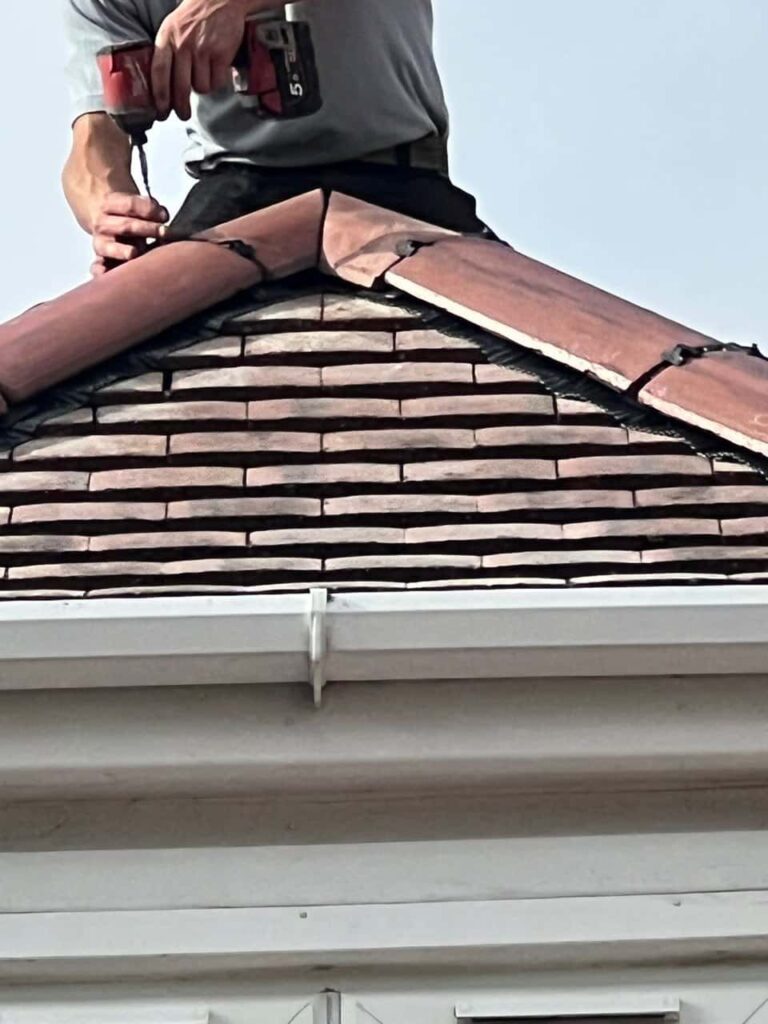
Why Damaged Roof Tiles Need Prompt Attention
Roof tiles form the main weather-resistant covering of a pitched roof. When one becomes cracked, displaced or completely missing, the exposed area may allow rain to reach the underlay and supporting materials beneath.
A single damaged tile does not always cause an immediate indoor leak, but it should not be ignored. For property owners in Brough, East Riding of Yorkshire, arranging a professional assessment can help contain the defect before weather exposure affects a wider section of the roof.
What Causes Roof Tiles to Break or Move?
Roof tiles are designed for long-term exposure, but they can still become damaged through weathering, impact or movement within the roof.
Common causes include:
- Strong winds lifting poorly secured tiles
- Falling branches or windblown debris
- Frost acting on existing cracks
- Age-related deterioration
- Failed or corroded fixings
- Movement in battens or roof timbers
- Previous foot traffic across the roof
- Deteriorated mortar around ridges and verges
- Incorrectly fitted replacement tiles
Identifying the cause is important. Replacing the visible tile without addressing weak fixings or damaged battens may allow the same problem to return.
Signs of a Broken or Missing Tile
Some tile damage is visible from ground level, particularly when a clear gap appears in the roof covering. Other defects may be more difficult to identify.
Warning signs can include:
- Pieces of tile found on the ground
- An obvious gap or uneven row
- A tile sitting lower than those around it
- Cracked or chipped tile surfaces
- Daylight visible from inside the loft
- Damp underlay or roof timbers
- Watermarks on ceilings or walls
- Debris collecting in gutters
- A new rattling sound during windy weather
The point where water appears indoors may not be directly beneath the damaged tile. Moisture can travel along underlay and timbers before becoming visible.
Why One Damaged Tile Can Affect Nearby Tiles
Pitched roof tiles are laid in overlapping courses. Their positioning and fixings help the covering perform as one connected system.
When a tile moves, the edges of surrounding tiles may become more exposed to wind. A loose tile can also shift against neighbouring materials, disturbing their alignment or fixings.
The inspection should therefore include more than the obvious gap. Adjacent tiles, battens and fixing points should also be checked for movement or deterioration.
The Role of the Roofing Underlay
Underlay provides secondary protection beneath the tiles, but it is not intended to replace a complete external covering. Older underlay may be brittle, torn or already affected by previous water penetration.
If a tile is missing, the underlay can remain exposed to rain, sunlight and wind-driven debris. Water may eventually pass through damaged laps or fixing holes and reach the roof timbers.
Prompt tile replacement helps protect this concealed layer before its condition worsens.
Can a Single Tile Be Replaced?
In many cases, an isolated broken or missing tile can be replaced without disturbing the whole roof. The contractor will carefully access the affected section, lift the surrounding tiles as required and secure a compatible replacement.
Before fitting the new tile, the roofer should check:
- The condition of the batten
- Whether the fixing point remains secure
- The state of the underlay
- The alignment of neighbouring tiles
- Whether nearby tiles are cracked
- Why the original tile failed
If these supporting elements remain sound, a local repair may be sufficient.
Why the Replacement Tile Must Be Compatible
Tiles vary in size, profile, thickness, material and interlocking design. A replacement that does not match the existing system may sit incorrectly or fail to overlap adjoining tiles properly.
A compatible tile is required to maintain:
- Correct weather protection
- Secure engagement with nearby tiles
- Consistent spacing
- Effective water flow
- A neat roofline
- Suitable fixing to the batten
A difference in colour may be visible where the surrounding roof has naturally weathered, but correct fit and performance are the main priorities.
What If Several Tiles Are Damaged?
Several broken or missing tiles may indicate a wider issue rather than a series of isolated defects. Strong winds, weakened fixings, deteriorated battens or movement within the roof can affect an entire section.
A broader inspection may be needed when:
- Damage appears across more than one roof slope
- Tiles repeatedly slip from the same area
- Numerous tiles sound loose or sit unevenly
- Previous repairs continue to fail
- The underlay is visibly deteriorated
- Water has reached the loft in several places
- Ridge or verge materials are also damaged
The resulting work may still be localised, but the full affected area should be identified before repairs begin.
Avoid Attempting Repairs from a Ladder
A damaged tile can appear easy to reach, but pitched roofs are difficult to access safely. Tiles may be slippery, brittle or unable to support concentrated weight. Walking on them can crack additional units and disturb the roof covering.
Temporary materials applied from outside may also direct water beneath neighbouring tiles or conceal the actual defect. Professional access and suitable repair methods reduce the likelihood of causing further damage.
What a Professional Tile Repair Should Include
An effective repair involves more than placing a new tile over the gap. The roofer should establish why the damage occurred and whether related components need attention.
The work may include:
- Removing broken material
- Inspecting the exposed underlay
- Checking and repairing battens
- Replacing damaged or missing tiles
- Securing loose neighbouring tiles
- Correcting alignment
- Examining nearby flashing, ridges and verges
- Confirming that water can drain freely down the roof slope
This evidence-based approach helps restore the continuity of the roof covering.
How to Reduce the Risk of Future Tile Damage
Not every instance of tile damage can be prevented, but routine observation can help identify developing problems early.
Property owners should look for visible changes after periods of strong wind and monitor the loft for dampness or daylight. Gutters can also provide useful clues, as fragments of tile or mortar may indicate deterioration above.
Any recurring movement should be professionally investigated rather than repeatedly treating individual tiles as unrelated failures.
Conclusion
Broken and missing roof tiles can expose underlay, battens and roof timbers to the weather. Although an isolated tile can often be replaced through a local repair, the surrounding materials should also be inspected to identify loose fixings, weakened battens or additional damage.
If you have noticed a cracked, slipped or missing tile on your property in Brough, TRP Roofing Brough can assess the affected area and recommend an appropriate repair. Timely professional attention can restore the roof covering and help prevent a minor opening from developing into more extensive water damage.
Call us on: 01482 736 096
Click here to find out more about TRP Roofing Brough
Click here to complete our contact form and see how we can help with your roofing needs.